The book club turns to a novel set in Washington DC to kick off the fall season. The Washington Post says of The Beautiful Things That Heaven Bears:
"One of the glories of the literature of exile is the sharp outlines a writer can bring to the contours of his adoptive society. For readers who were born in the writer's host country, such literature can uncover things that might otherwise be obscured by familiarity. Dinaw Mengestu's praiseworthy first novel, The Beautiful Things That Heaven Bears, draws upon this principle. Take, for example, this wide-eyed reflection by Sepha Stephanos, the Ethiopian émigré who narrates the story, on riding the Washington Metro: "The red-line train bound for the suburbs of Maryland is delayed. The trains of this city continue to marvel me, regardless of how long I live here. It's not just their size, but their order, the sense you get when riding them that a higher, regulatory power is in firm control, even if you yourself are not." Most native Metro users probably wouldn't greet a delay with such transcendental musings.
But Stephanos lacks an outlet -- aside from his friends -- to channel his thoughts. The novel underscores this element by contrasting his plight with that of the 19th-century writer Alexis de Tocqueville, who is a favorite author of a character in the novel. Unlike the blue-blooded Frenchman who returned to his homeland and was celebrated for his insights into American life, the struggling Stephanos seems unlikely to return to his native country or win admiration for his perspicacity.
As a teenager, Stephanos fled Ethiopia to escape fallout from the military coup that ousted Haile Selassie in 1974 and thrust the Dergue -- a junta that ruled the country until 1987 -- into power. Stephanos's father -- a prosperous lawyer in Ethiopia's capital -- attracted the ire of a government determined to snuff out all so-called counter- revolutionaries. After witnessing his father's brutal treatment at the hands of the Dergue's henchmen, Stephanos acceded to his mother's wishes and fled Ethiopia. Eventually, he made his way to Washington.
Mengestu's tightly written novel largely unfolds in alternating chapters of past and present. The story is structured around a period of unrest in Logan Circle when gentrification led to evictions. For Stephanos, the influx of moneyed white people into the predominantly black neighborhood where he resides and runs a grocery store is a welcome event. He hopes that his business might improve along with the neighborhood and that his loneliness might be alleviated by a white academic and her biracial child, whom he befriends.
Unfortunately, vandalism aimed at Logan Circle's new residents prompts the Tocqueville-loving scholar, with whom Stephanos is enamored, to leave the neighborhood. And so, while Stephanos mulls over the events that vaporized his hopes for a more fulfilling life, he finds himself in a self-reflective purgatory, searching for a new raison d'être. Indeed, the title of the novel comes from the last lines of Dante's Inferno, where the poet, emerging from hell, is granted a glimpse of heaven before he makes his way into purgatory.
Apart from its lean sentences, which very rarely overreach, Mengestu's novel benefits from his plausible depiction of characters caught on the seams between two worlds -- rich/poor, black/white, citizen/foreigner. This lends an urgency to their ruminations that believably cleanses their conversation of small talk. In other words, the big ideas of Stephanos and his two African friends about racial politics in America, the necessary accouterments for success, and why colonels make for better dictators than generals don't come off as stilted but as natural byproducts of their exiled condition.
With its well-observed characters and brisk narrative pacing, greatly benefited by the characters' tension-laced wit, The Beautiful Things That Heaven Bears is an assured literary debut by a writer worth watching."
Wednesday, April 30, 2008

Wednesday, April 23, 2008
In the Shadow of No Towers
If you enjoyed Art Spiegelman's Maus you may enjoy his latest book In the Shadow of No Towers.
 Publisher's Weekly said of it "an artful rant focused on the events of 9/11 and afterward by a world-class pessimist ("after all, disaster is my muse"). The artist, who lives in downtown Manhattan, believes the world really ended on Sept. 11, 2001—it's merely a technicality that some people continue to go about their daily lives. He provides a hair-raising and wry account of his family's frantic efforts to locate one another on September 11 as well as a morbidly funny survey of his trademark sense of existential doom. "I'm not even sure I'll live long enough," says a chain-smoking, post-9/11 cartoon-mouse Spiegelman, "for cigarettes to kill me." The book is a visceral tirade against the Bush administration ("brigands suffering from war fever") and, when least expected, an erudite meditation on the history of the American newspaper comic strip, born during the fierce circulation wars of the 1890s right near the World Trade Center site in lower Manhattan."
In the Shadow of No Towers is available in the Library at PN6727.S6 I5 2004.
Publisher's Weekly said of it "an artful rant focused on the events of 9/11 and afterward by a world-class pessimist ("after all, disaster is my muse"). The artist, who lives in downtown Manhattan, believes the world really ended on Sept. 11, 2001—it's merely a technicality that some people continue to go about their daily lives. He provides a hair-raising and wry account of his family's frantic efforts to locate one another on September 11 as well as a morbidly funny survey of his trademark sense of existential doom. "I'm not even sure I'll live long enough," says a chain-smoking, post-9/11 cartoon-mouse Spiegelman, "for cigarettes to kill me." The book is a visceral tirade against the Bush administration ("brigands suffering from war fever") and, when least expected, an erudite meditation on the history of the American newspaper comic strip, born during the fierce circulation wars of the 1890s right near the World Trade Center site in lower Manhattan."In the Shadow of No Towers is available in the Library at PN6727.S6 I5 2004.
Saturday, April 19, 2008
Book Club Hits with Henry!
Current (and some previous!) faculty and staff gathered on Friday 18 April to discuss the adventures of Prince Hal, Hotspur and Falstaff. Discussion ranged from history to current politics to family dramas (both fictional and real-life!) to poetry and also films.
 (above Falstaff, in Stratord-upon-Avon)

(above Falstaff, in Stratord-upon-Avon)Some of us previewed My Own Private Idaho and enjoyed the adaptation of Shakespeare's dynastic struggle & coming-of-age story to the street hussler culture of 1990s Portland.

(above, Keaneau Reeves -- a modern day Hal?)
If the better part of valour is discretion, why is that line so often taken out of context? And why does it generate 286,000 Google hits? Do all those webmasters know Falstaff was referring to playing dead?
And how is that related to discrete mathematics? This is truly a multi-disciplinary book group!
Unfortunately, we didn't have any Falstaff Beer:
Thanks to Kaya Ford for hosting!

Monday, March 10, 2008
Henry IV, a tale for our times?
The Alexandria Book Club will revisit a sometime neglected classic in the Spring -- Shakespeare's Henry IV Part I. Does the story of a wayward son coming clean, inheriting his father's throne and waging a belligerent war of conquest have anything to tell us about the current occupant of the White House?
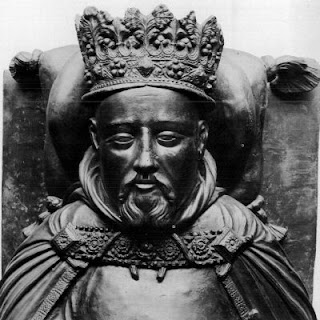 The Bushes may not be Lancastrians, and the presidential elections may not be the Wars of the Roses, but does Prince Hal's story resonate with modern politics? A scion of an aristocratic house spends a dissipated youth, reforms and wins political office, assumes his father's position and under the influence of his father's self-interested courtiers wages a war of conquest in a foreign land.
Hal, as the warrior-king Henry V was successful in his French ambitions. But even this success was short lived:
"Of France and England, did this King succeed:
Whose State so many had the managing,
That they lost France, and made his England bleed:"
Saturday, February 16, 2008
Fitzgerald flops
F Scott's lush, complex, and sometimes unlikable second novel The Beautiful and Damned drew a record small number of book club fans. The Jazz Age is truly dead.
 Nevertheless, die-hards gathered in Arlington on a mild & sunny 8 Feb to discuss class, mobility, the tragedy of wasted talent and the wages of leisure, as well as a lively consideration of Fitzgerald's oeuvre, followed up with speculation as to who might be Fitzgerald's modern-day spiritual heirs (the Beats?). Highballs were also consumed.
Your faithful correspondent promises not to take it personally that The Beautiful and Damned was a bust. We promise to return to our regularly scheduled program of gay confessional literature and themes of social despair.
Nevertheless, die-hards gathered in Arlington on a mild & sunny 8 Feb to discuss class, mobility, the tragedy of wasted talent and the wages of leisure, as well as a lively consideration of Fitzgerald's oeuvre, followed up with speculation as to who might be Fitzgerald's modern-day spiritual heirs (the Beats?). Highballs were also consumed.Your faithful correspondent promises not to take it personally that The Beautiful and Damned was a bust. We promise to return to our regularly scheduled program of gay confessional literature and themes of social despair.
Thursday, January 24, 2008
Book Club Hits the Jazz Age
Mix the martinis, find your cigarette holder and get ready to spend some quality time in the dissolute world of the jazz age.

The Book Club turns to a minor classic this winter, reading F Scott's Fitzgerald's The Beautiful and Damned: "One of F. Scott Fitzgerald's best-known works, The Beautiful And Damned is a glittering novel set against an era of intoxicating excitement and ruinous excess. Hilarious and heartbreaking, this is a scathing, ironic tale whose fictional couple parallells the real-life relationship of Fitzgerald and his wife, from its romantic beginning to its tragic end. It remains to this day a devastating portrait of insatiable greed, ruthless ambition, and wasted talent."
Fitzgerald's works are now available in the public domain, and can be accessed via Project Gutenberg or Google Books.
The Book Club meets Friday Feb 8th.
Monday, November 19, 2007
Book club discusses Maus
15 members of the Alexandria Campus Book Club (including our youngest member -- who has not yet attained her first birthday!) gathered at the Matt Todd's apartment in Washington DC's Glover Park.
 Discussion ranged from the American Indian Museum to Selling the Holocaust, to the graphic novel/ comic genre to the the symbolism of anthropormorphic animals. We also drank some wine.
Read more about Spiegelman on his website or vist the comicpedia.
Suggestions are welcome for our next title.
Subscribe to:
Posts (Atom)